Itchy, burning feet that never quite seem to settle can be quite a nuisance. Athlete’s foot can be an uncomfortably persistent issue, especially in Hong Kong’s warm, humid climate.
Here’s what causes it and what you can do about it.
What is tinea pedis (athlete’s foot)?
Tinea pedis (athlete’s foot)is a superficial fungal infection that affects the skin of the feet. It most often begins between the toes, but can spread to the soles, sides of the feet and even the toenails.
The infection is caused by a group of fungi called dermatophytes. These organisms thrive in warm, moist environments such as sweaty socks, enclosed shoes, communal changing rooms, swimming pools and public showers.
Despite its name, you don’t have to be an athlete to get athlete’s foot.
Athlete’s foot symptoms
Athlete’s foot symptoms can vary, but they commonly include:
- Itching, stinging or burning sensations between the toes or on the soles
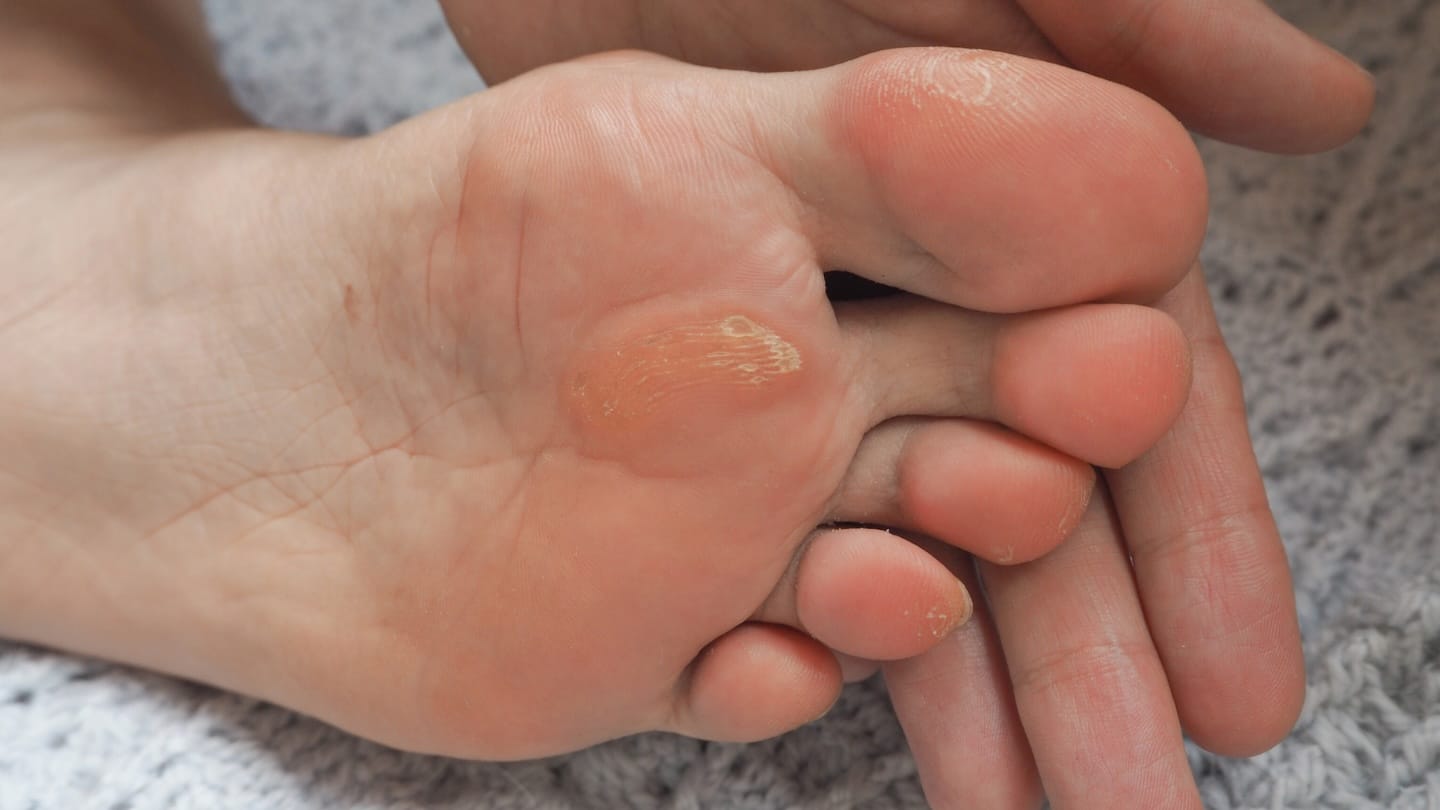
- Red, scaly or dry skin around the heel and sole
- Soft, white, soggy skin between the toes, sometimes with cracks or fissures
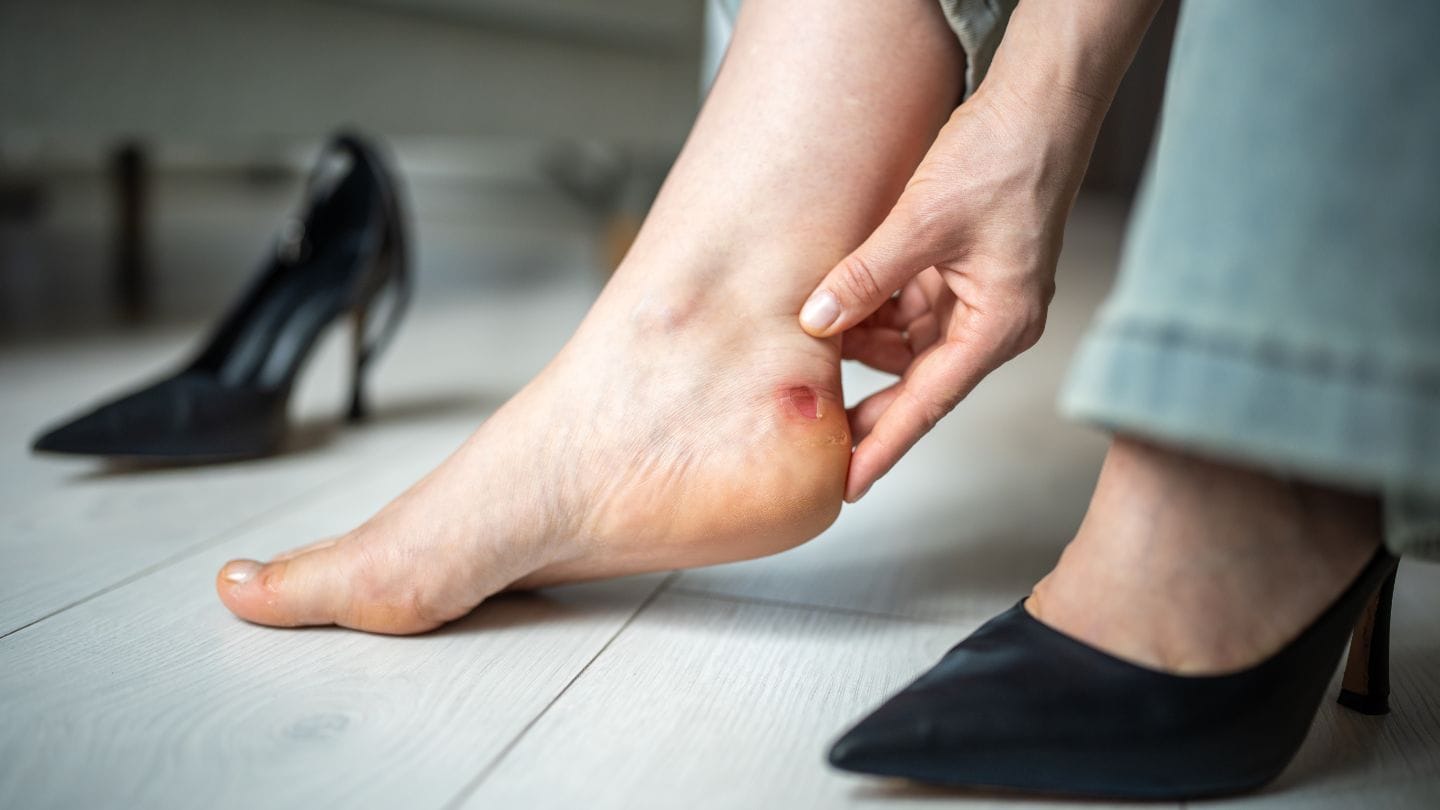
- Flaking, peeling or splitting skin
- Blisters that may weep or form crusts
- Unpleasant odour from the feet.
In some people, the skin can become very inflamed, sore or swollen. The infection may also spread to the toenails, leading to thickened, discoloured nails (onychomycosis).
If you think you might have athlete’s foot, please see your podiatrist or your doctor. Several other skin conditions can look similar, including eczema, contact dermatitis and psoriasis, so a professional assessment can help to ensure a correct diagnosis and appropriate treatment.
Athlete’s foot causes and risk factors
The fundamental cause of athlete’s foot is a tinea infection of the skin. However, certain factors make it more likely that the fungus will take hold and persist.
You’re more likely to develop athlete’s foot if you:
- Live in a warm, humid climate such as Hong Kong
- Walk barefoot on contaminated surfaces (for example, communal showers, pool decks, gym changing rooms)
- Wear tight or closed, non-breathable footwear, especially for long periods
- Sweat heavily around the feet
- Wear synthetic or damp socks, or do not allow shoes to dry fully between uses
- Share towels, socks or shoes with someone who has a tinea infection
- Have reduced immunity (for example, due to diabetes or other medical conditions)
- Have an existing fungal nail infection, which can act as a reservoir for fungus
- Have small cuts, cracks or skin breakdown between the toes.
Athlete’s foot treatment – how to treat tinea pedis
Athlete’s foot treatment has two goals: clearing the current infection and reducing the chance that it comes back. The best approach depends on how severe the tinea infection is, how long it has been present and whether it has spread to the toenails or other areas of the body.
- Topical antifungal medication
For most mild to moderate cases, topical (applied to the skin) antifungal products are the first line of athlete’s foot treatment. These come in different forms, including creams, gels, sprays and powders. - Oral antifungal medication
If athlete’s foot is severe, widespread, very itchy, recurrent, or not responding to topical therapy, your podiatrist or doctor may recommend oral antifungal tablets. These are particularly useful when there is an associated fungal nail infection. Oral medicines need careful selection and monitoring, especially if you have other medical conditions or take regular medication. - Managing skin irritation and secondary infection
Sometimes tinea pedis causes significant inflammation or becomes secondarily infected with bacteria. Signs of bacterial infection can include increased redness, swelling, warmth, oozing or pain. In these cases, additional treatment, such as topical or oral antibiotics, anti-inflammatory creams or soothing soaks, may be necessary alongside antifungals. - Addressing the underlying environment
Knowing how to treat tinea pedis is only part of the story. To prevent recurrence, it is essential to change the environment that allowed the fungus to thrive in the first place.
This means improving foot hygiene, footwear choices and daily habits. - Professional podiatry care
A podiatrist can:- Confirm the diagnosis of tinea pedis and rule out other causes of skin changes
- Recommend the most appropriate athlete’s foot treatment for your feet and overall health
- Carefully remove thickened, scaly or blistered skin to promote healing and comfort
- Identify and manage any related problems such as fungal nails, warts or biomechanical issues.
If your symptoms are persistent, painful, or keep returning even after over-the-counter treatment, a podiatry assessment is strongly recommended.
Prevention tips – how to prevent athlete’s foot
Once you have experienced a tinea infection, preventing it from returning becomes very important. Small daily habits can make a large difference to the health of the skin on your feet.
To reduce the risk of athlete’s foot returning, try to:
- Keep your feet clean and dry
- Wash your feet daily with mild soap and water, paying attention to the areas between the toes.
- Dry thoroughly – especially between the toes – using a clean towel. Pat rather than rub if the skin is already irritated.
- Consider using a hairdryer on a cool setting between the toes if you find it difficult to keep this area dry.
- Choose breathable footwear and socks
- Wear shoes made from breathable materials such as leather or mesh where possible.
- Avoid wearing the same pair of shoes every day.
- Choose moisture-wicking socks (for example, cotton blends or specific sports socks) and change them during the day if your feet become damp.
- Protect your feet in communal areas
- Wear waterproof sandals or flip-flops in communal showers, changing rooms and around swimming pools.
- Avoid walking barefoot on wet floors in gyms or sports facilities.
- Do not share personal items
- Do not share towels, socks or shoes with others.
- Wash towels and bedding regularly, especially during an active tinea infection.
- Use antifungal products preventively when needed.
- For example, an antifungal powder or spray in your shoes or on your feet during hot weather, periods of increased activity or when you are using communal facilities more often
When to see a podiatrist about athlete’s foot
You should consider booking an appointment with a podiatrist if:
- Your symptoms do not improve after two to four weeks of appropriate over-the-counter athlete’s foot treatment
- The rash worsens, spreads or becomes very painful
- You notice signs of bacterial infection such as significant redness, swelling, warmth or oozing
- You have diabetes, circulation problems or a condition affecting your immune system
- The infection keeps coming back, or your toenails are also affected.
Prompt, tailored care can reduce discomfort, help protect the integrity of the skin on your feet and lower the risk of complications.
Supporting healthy feet at Hong Kong Foot Clinic
Athlete’s foot is extremely common, but it does not have to be a constant part of your life. Timely treatment can help to control tinea pedis and reduce the chance of recurrent infections.
If you are concerned about athlete’s foot symptoms, are unsure about the best way to manage a tinea infection, or feel like the problem keeps returning, then please come to see us. Our podiatrists can assess your feet, discuss your options and put a personalised treatment and prevention plan in place.
Disclaimer
All information is general and not intended as a substitute for professional advice.
References
- Mayo Clinic, Athlete’s foot, https://www.mayoclinic.org/diseases-conditions/athletes-foot/symptoms-causes/syc-20353841, [Accessed 9 December 2025]
- MSD Manuals, Tinea pedis, https://www.msdmanuals.com/home/skin-disorders/fungal-skin-infections/athlete-s-foot-tinea-pedis, [Accessed 9 December 2025]
- VeryWellHealth, Severe athlete’s foot, https://www.verywellhealth.com/athletes-foot-1068771, [Accessed 9 December 2025]