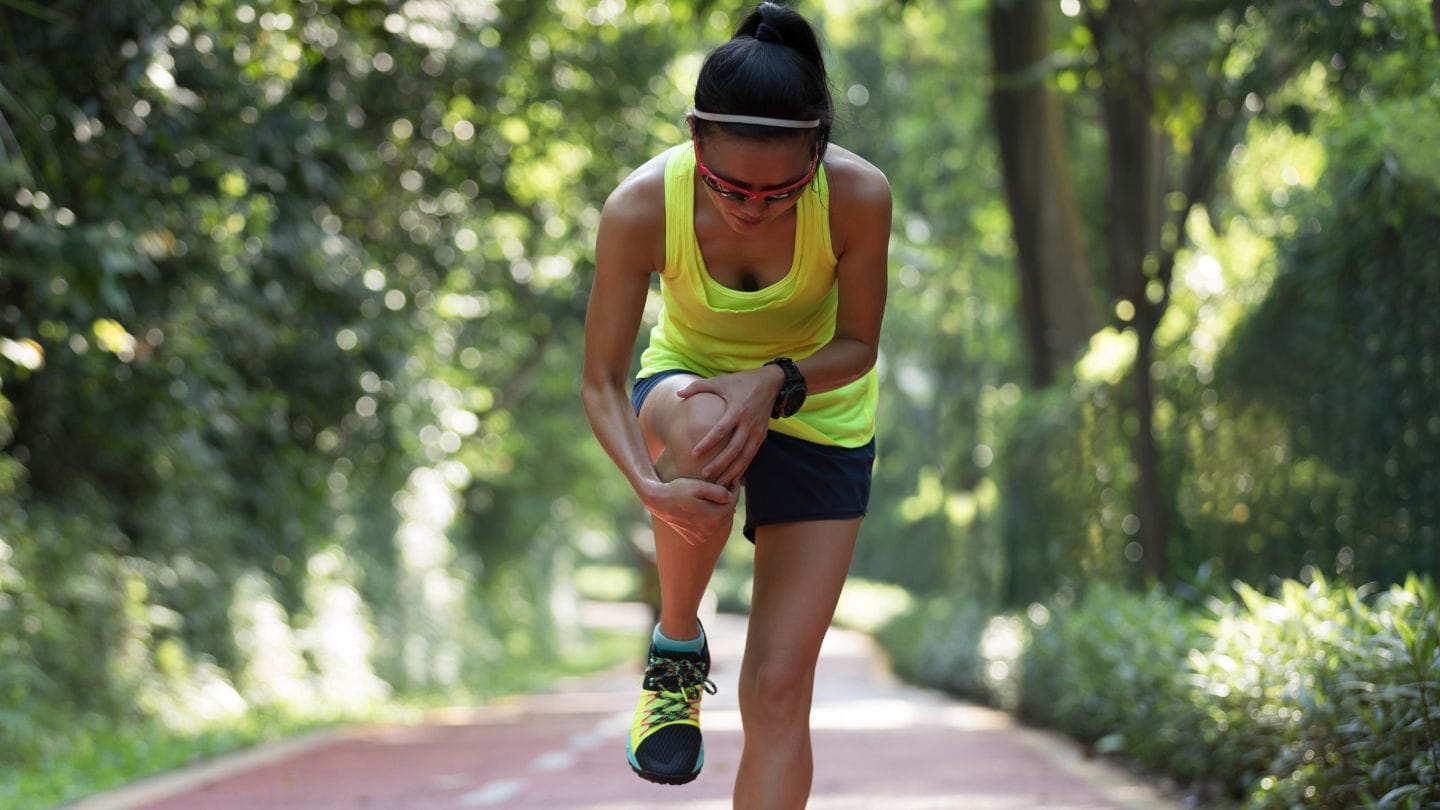
Have you ever felt a dull ache around your kneecap? Maybe after a long run, climbing stairs, or spending the day on your feet?
You might be dealing with what’s commonly called runner’s knee. Despite its name, this condition isn’t limited to runners – anyone whose knees are exposed to repetitive stress or movement can experience it.
Medically known as patellofemoral pain syndrome (PFPS), runner’s knee is one of the most frequent causes of front-knee pain. It often develops gradually and is characterised by a nagging discomfort that worsens when bending the knee, climbing stairs, or sitting for long periods.
At Hong Kong Foot Clinic (HKFC), our podiatrists and physiotherapists regularly help people with this condition, which can affect anyone from office workers to competitive athletes. Understanding what causes this pain and how it can be treated is the first step toward restoring comfort, mobility and confidence in movement.
What causes runner’s knee?
There are several reasons why you might develop runner’s knee. Common causes include:
- Overuse or repetitive strain: Frequent running, squatting or jumping places repeated pressure on the knee joint.
- Poor biomechanics or alignment: Flat feet or over-pronation can alter leg alignment, changing how forces travel through the knee.
- Muscle weakness or imbalance: Weak hip or glute muscles and tight thigh muscles affect how the kneecap tracks through its groove.
- Sudden changes in activity: Increasing training intensity or running on new terrain too quickly can overload the joint.
- Inadequate footwear or orthotic support: Shoes lacking cushioning or support can lead to altered gait and knee stress.
Recognising the symptoms of runner’s knee
Common runner’s knee symptoms include:
- A dull, aching pain around or behind the kneecap
- Pain during running, squatting, stair climbing, or sitting for long periods
- Clicking or grinding sensations when bending or straightening the knee
- Tenderness when pressing around the kneecap edges.
If these symptoms persist, it’s important to seek a professional assessment to rule out other causes of knee pain.
How is runner’s knee treated?
Runner’s knee treatment depends on the underlying cause. Most people recover with conservative care and guided rehabilitation.
1. Load management and activity modification
Reducing high-impact activity and allowing adequate rest gives irritated tissues time to heal. Avoid sudden increases in training intensity or hill running until pain settles.
2. Strength and movement retraining
Targeted exercises to strengthen the hips, quadriceps, and core muscles help improve knee alignment and stability. Functional movement retraining, such as step-down control and gait adjustments, may aid long-term improvement.
3. Footwear and orthotic support
Flat feet or poor footwear can contribute to knee pain. HKFC’s podiatrists assess your biomechanics and may recommend custom orthotics to support proper alignment and reduce joint stress.
4. Physiotherapy
Our physiotherapists design personalised programs to restore mobility, improve muscle activation, and guide your runners knee recovery through progressive exercises. Manual therapy and taping may also provide short-term relief.
5. Preventing recurrence
Once pain subsides, gradual return to activity and ongoing strength work are key to avoiding flare-ups. Education on training load, running form, and knee protection for runners supports long-term success.
How Hong Kong Foot Clinic can help
Our integrated approach combines podiatry and physiotherapy expertise to help address the root cause of your knee pain:
- Biomechanical assessment to analyse gait, alignment, and foot mechanics
- Custom orthotic prescription to optimise lower-limb function and knee tracking
- Tailored rehabilitation to strengthen key muscle groups and improve control
- Education and prevention planning to reduce re-injury risk and support sustainable recovery.
How to avoid runner’s knee
To protect your knees and reduce your risk of future pain:
- Warm up properly before activity and include glute activation exercises
- Gradually increase training volume and avoid over-striding
- Strengthen your hips, hamstrings, and quadriceps regularly
- Replace worn-out running shoes and choose supportive footwear
- Cross-train with low-impact activities such as swimming or cycling.
Take the first step towards recovery
If you’re experiencing knee discomfort or suspect patellofemoral pain syndrome, please book an assessment with the Hong Kong Foot Clinic team.
Disclaimer
All information is general and not intended as a substitute for professional advice.
References
- Johns Hopkins University, Patellofemoral Pain Syndrome (Runner’s Knee), https://www.hopkinsmedicine.org/health/conditions-and-diseases/patellofemoral-pain-syndrome-runners-knee, [Accessed 21 October 2025]
- Mayo Clinic, Patellofemoral pain sydnrome, https://www.mayoclinic.org/diseases-conditions/patellofemoral-pain-syndrome/symptoms-causes/syc-20350792, [Accessed 21 October 2025]
- Callahan, E.A., Chin, K.E. & Chu, S.K. Current Evidence of Evaluation and Management of the Athlete with Patellofemoral Pain Syndrome. Curr Phys Med Rehabil Rep 13, 30 (2025). https://doi.org/10.1007/s40141-025-00502-9, [Accessed 21 October 2025]