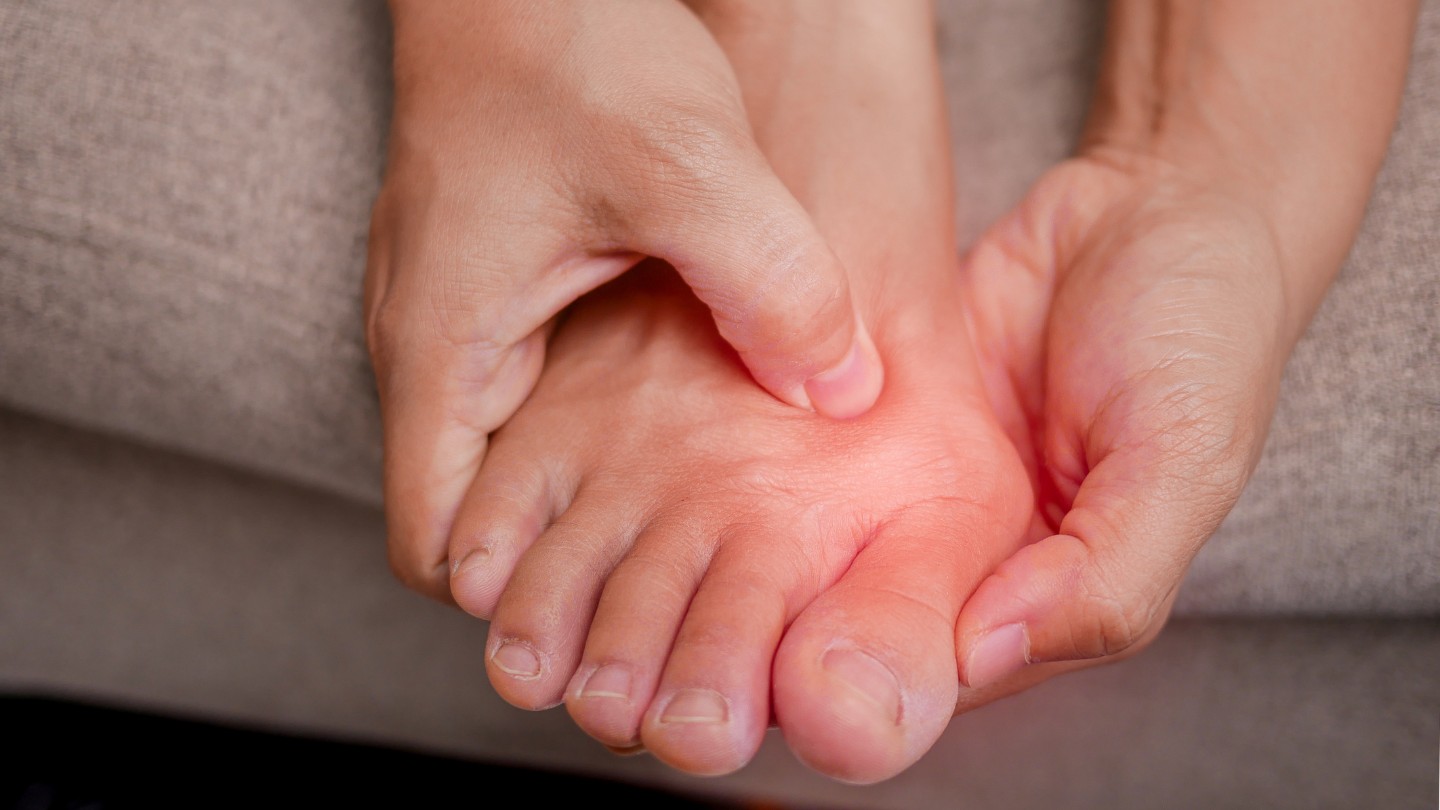
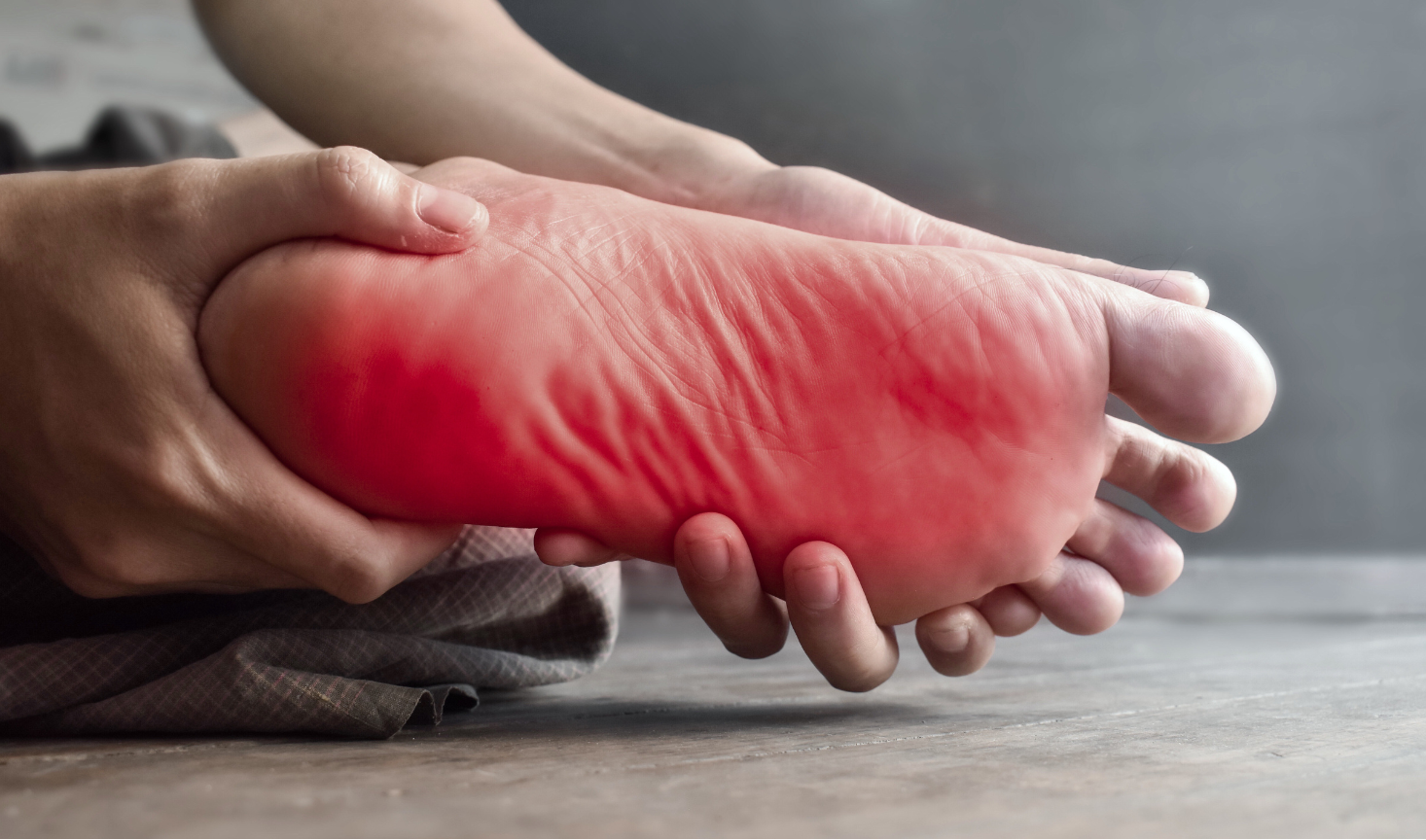
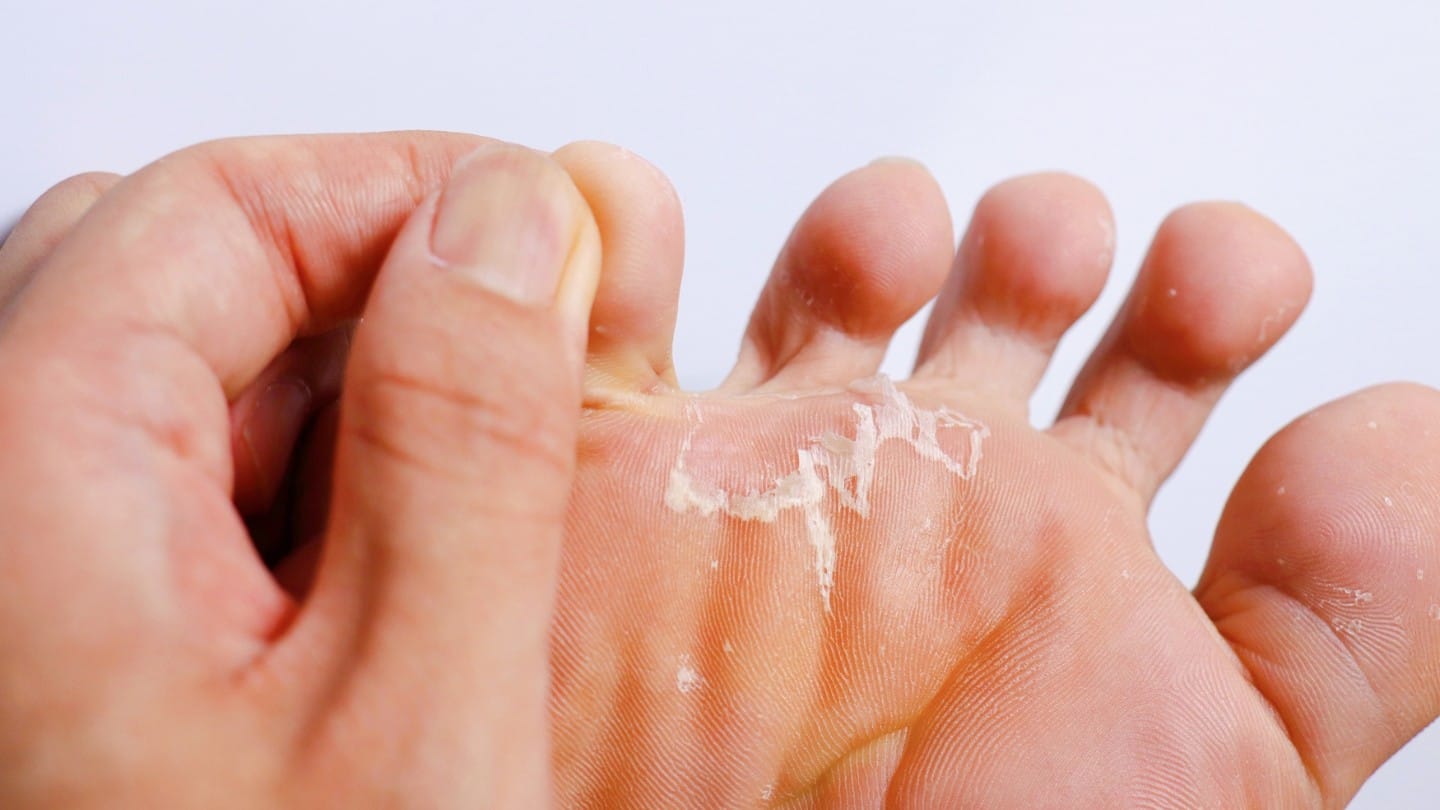
Heel pain is a location, not a diagnosis. Plantar fasciitis is one possible cause, but it’s best not to assume that diagnosis. Heel pain can also come from the Achilles tendon, nerves, bursae, heel bone, joints or other structures around the foot and ankle, which is why it’s wise to see a podiatrist.
What does plantar fasciitis usually feel like?
Plantar fasciitis may cause a sharp pain underneath your heel, most commonly when you first start moving after a period of sitting or lying down – it can make getting out of bed in the morning rather an ordeal! You may also notice aching or swelling in your heel.
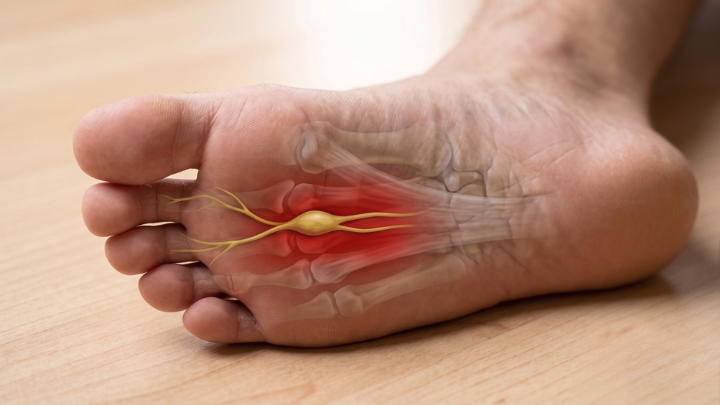
It happens when the plantar fascia becomes irritated or inflamed. This is a strong band of connective tissue that runs underneath your foot, connecting your heel to your toes. It may be triggered by high-impact sports, having low or high arches, tight calf muscles, being overweight or spending a lot of time on your feet.
A quick heel-pain location guide
Although plantar fasciitis is a very common cause of heel pain, it’s not the only one. These patterns help narrow the possibilities, but symptoms can overlap. Podiatrists are trained to differentiate between similar conditions to reach an informed diagnosis.
| Where it hurts | Possible cause | What you might notice |
| Inner underside of the heel | Plantar fasciitis | Pain with your first few steps after getting out of bed or standing up after sitting. It may ease once you get moving, then return after spending longer periods on your feet. |
| Centre of the underside of the heel | Heel pad pain | A deep, bruise-like pain when you put your heel down, particularly on hard surfaces or when there is direct pressure under the heel. |
| Back of the heel | Achilles tendinopathy | Pain at the back of the ankle or heel during activities that load the Achilles tendon, such as running, jumping or repeatedly pushing up onto your toes. |
| Back of the heel around the Achilles insertion | Retrocalcaneal bursitis | Tenderness or swelling at the back of the heel. Shoes that press or rub against the area may make it more uncomfortable. |
| Heel or sole | Nerve-related heel pain | Burning, tingling, pins and needles or numbness in the heel or sole rather than pain alone. |
| Deep within the heel | Calcaneal stress injury | A deeper heel pain that becomes more noticeable with repeated weight-bearing activity, particularly after a recent increase in running, jumping or training. |
When heel pain may be something other than plantar fasciitis
Alongside the location of your heel pain, we also consider what triggers your symptoms and when they occur. Is your heel pain related to the fact that you’re training for a half marathon? Is it worse with certain shoes? Does it make you limp when you first get out of bed?
These symptoms may lead us in different diagnostic directions. To aid diagnosis, we may order imaging studies such as X-rays.
Achilles tendinopathy
Your Achilles tendon connects your calf to your heel. If you’ve developed Achilles tendinopathy, you might notice pain at the back of your heel (rather than underneath it). You may also notice that pain worsens with tendon-loading activities like running and jumping.
That actually provides a helpful clue. Your podiatrist may ask you to perform heel raises or hop during your assessment to see if it reproduces symptoms. We may also examine your tendon for signs of tenderness, thickening or swelling.
Read our blog on Treating Achilles tendonitis (a more acute version of Achilles tendinopathy)
Heel bursitis (retrocalcaneal bursitis)
Pain at the back of your heel may also come from your bursa, a slippery fluid-filled sac that sits between your heel bone and Achilles tendon. Retrocalcaneal bursitis symptoms can mimic Achilles tendon ones. One clue is whether your shoes make it worse – pressure on the back of your heel can compress your bursa and increase discomfort.
Heel pad pain
Pain directly beneath the centre of the heel deserves separate consideration. Heel pad disorders are recognised as a possible source of plantar heel pain. Someone with heel pad pain may describe a deeper or bruise-like sensation when the heel strikes the ground, rather than the more characteristic first-step pain associated with plantar fasciitis.
Where the discomfort occurs – and exactly what provokes it – helps the clinician decide which structures require closer examination.
Nerve-related heel pain
The tibial nerve runs down the back of your lower leg and into your foot. If it’s injured or compressed, you may experience nerve-related heel pain rather than straightforward plantar fasciitis. This becomes more likely if you’re experiencing burning, tingling, pins and needles, numbness or altered sensation in your heel.
Calcaneal stress fracture
Deep heel pain associated with repeated loading may mean you’ve injured your heel bone itself through overuse. If we suspect this, we’re likely to ask whether you’ve increased your activity levels recently. Are you running and jumping more than you used to? Perhaps you’ve recently joined a netball team or taken up a couch-to-5k running program.
Stress fractures develop slowly over time. The initial twinge may worsen as time goes on, and you may also notice warmth, bruising or stiffness. Calcaneal stress fractures need rest and care. We may recommend a moon boot to ease the load on your heel.
Arthritis, gout or inflammatory conditions
Heel pain may also relate to inflammatory or systemic conditions like arthritis or gout. That’s more likely if you have swelling or pain in other joints.
Heel spurs
Your body’s attempts to repair ongoing strain on your plantar fascia or Achilles tendon can lead to hard calcium deposits under your heel bone. This is a heel spur, a bony growth poking out from your heel bone into your foot. These can occur alongside plantar fasciitis or separately.
Could children and teenagers have a different cause of heel pain?
Yes. Active and growing kids and teens may develop Sever’s disease, an inflammation of the growth plate in the heel.
During a growth spurt, kids’ bones may grow faster than their muscles and tendons. A tight calf straining to keep up with a lengthening leg bone may pull on the Achilles tendon, which in turn pulls on the growth plate in the heel. Repeated irritation, common during running and jumping, may trigger Sever’s disease.
Read our blog on Sever’s disease
When should heel pain be assessed?
When it’s persisting, worsening or changing how you walk or exercise. Don’t assume it’s plantar fasciitis.
A proper heel assessment can identify the underlying cause of your heel pain, including considering whether there are any nerve-related concerns or anything suggestive of inflammatory or systemic conditions. Once the cause is identified, we can recommend the most appropriate evidence-based treatment to help ease your heel pain.
Disclaimer
All information is general and not intended as a substitute for professional advice. Any surgical or invasive procedure carries risks.
References [Accessed 21 September 2026]
- Alshami, A. M., Souvlis, T., & Coppieters, M. W. (2008). A review of plantar heel pain of neural origin: Differential diagnosis and management. Manual Therapy, 13(2), 103–111. https://doi.org/10.1016/j.math.2007.01.014
- Aronow, M. S. (2005). Posterior heel pain (retrocalcaneal bursitis, insertional and noninsertional Achilles tendinopathy). Clinics in Podiatric Medicine and Surgery, 22(1), 19–43. https://doi.org/10.1016/j.cpm.2004.08.003
- Healthdirect Australia. (2025, March). Plantar fasciitis. https://www.healthdirect.gov.au/plantar-fasciitis
- Kirkpatrick, J., Yassaie, O., & Mirjalili, S. A. (2017). The plantar calcaneal spur: A review of anatomy, histology, etiology and key associations. Journal of Anatomy, 230(6), 743–751. https://doi.org/10.1111/joa.12607
- Koc, T. A., Jr., Bise, C. G., Neville, C., Carreira, D., Martin, R. L., & McDonough, C. M. (2023). Heel pain – plantar fasciitis: Revision 2023. Journal of Orthopaedic & Sports Physical Therapy, 53(12), CPG1–CPG39. https://doi.org/10.2519/jospt.2023.0303
- Matthews, W., Ellis, R., Furness, J., & Hing, W. A. (2021). The clinical diagnosis of Achilles tendinopathy: A scoping review. PeerJ, 9, e12166. https://doi.org/10.7717/peerj.12166
- Rio, E., Mayes, S., & Cook, J. (2015). Heel pain: A practical approach. Australian Family Physician, 44(3), 96–101. https://www.racgp.org.au/afp/2015/march/heel-pain-a-practical-approach